Sean Klein did his Bachelor in Biology at the University of Würzburg. He Wrote his Bachelor’s thesis at the Helmholtz Institute for RNA-based Infection Research. In his Masters, Sean studied Bioinformatics at the University of Tübingen and spent one year abroad at the Sapienza University of Rome. After short stays at the Universities of Bucharest, Stockholm and the Autonomous University of Madrid, he wrote his Master’s Thesis back in Germany. In collaboration with the Hannover Medical School and the Peter L. Reichertz Institute for Medical Informatics of the Technical University Braunschweig, he worked on deep learning, explainable AI and Computer vision to detect novel biomarkers in tissue images of kidney cancer patients.
Since June 2024, Sean has been a research associate and a PhD student at the University of the Bundeswehr Munich. There, he works on improving the Artificial Intelligence of Non-Player Characters (NPCs), employing machine learning to create more believable NPCs in Serious Games that provide simulated training environments for complex missions. His research interests include imitation learning and reinforcement learning, but also other methods that fit the theme of “Learning from Human Behaviour”. Results of his research works will be integrated into B-prepared.


 The University of the Bundeswehr Munich is a campus university located in the Munich area. Students and employees of the university have easy access to the rich culture, history and diversity offered by the city of Munich, as well as to the beauty of nature the Bavarian Alps have to offer.
Besides a high faculty-student ratio that ensures the high quality of teaching and scientific/technical supervision, the university also has extremely modern research infrastructure for research and technology demonstration.
The University of the Bundeswehr Munich is a campus university located in the Munich area. Students and employees of the university have easy access to the rich culture, history and diversity offered by the city of Munich, as well as to the beauty of nature the Bavarian Alps have to offer.
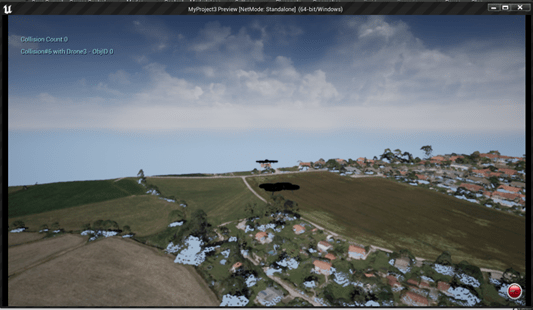
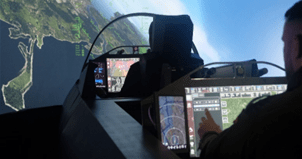
Besides a high faculty-student ratio that ensures the high quality of teaching and scientific/technical supervision, the university also has extremely modern research infrastructure for research and technology demonstration.  B-prepared will benefit first and foremost from the expertise and research infrastructure of the “AI-Lab” from the research team “Applied Artificial Intelligence in Dynamic Systems” on developing mission autonomy of the non-player characters. The Applied Artificial Intelligence in Dynamic Systems team focuses mainly on algorithms and AI-techniques for automated decision-making processes/support and dynamic human-AI interactions. Besides generic indoor simulators at the AI-Lab as test platforms to investigate and benchmark algorithms, the team also has access to more immersive test instructure and expertise in human-in-the-loop experimental research from theHuMiCS-Lab, a sister lab of the Institute for Flight Systems.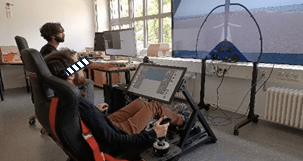


You must be logged in to post a comment.